What exactly does that mean?
I've been writing for a quite a while now and someone who heard it during an author's speech about bestselling books advised me to do this. My response? "I thought I was already tweaking the trope." And might I add, sometimes to the dislike of big chunks of the readership, who, despite what they might post online, really REALLYREALLYreally don't like any stories that aren't inside the box of romance or science fiction or whatever genre they're reading. Mostly, in my humble opinion, the romance readers are the toughest when it comes to tropes.
Take, for example, the romance heroine. In a historical, 90 percent of readers will say that they want her a virgin, or at least, a virginal woman if she'd lost her hymen at some point outside/before the story. Courtesans and mistresses are harshed at; if the heroine is a courtesan, she better be a fake one (not sleeping with dozens of men), with a heart of gold, who has fallen from grace, and her redemption theme better be there.
There are* exceptions, of course, but, like I said, twisting the trope can mean sales death for either that book or a future book. I'd think a smart author, unless she was known for it, wouldn't really twist any trope on the last book of her contract, just in case.
Even if the heroine was a widow, some authors even write in a "fake" widow trope, in the sense that she really never had sex because her dead husband had been "incapable" or even turned out to be gay! Now, I'm sure this was NOT the kind of tweaking the trope over which many are rah-rah-ing.
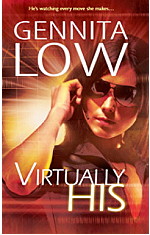
Then there is the romantic suspense heroine, the genre I represent. The "kick-ass" heroine didn't start till the late 90s and I'm not being bigheaded to say that I'm part of the original group of romance authors who ushered that term and that kind of character into romance readers' consciousness.
When I first started reading romantic suspense, the heroine in those stories tended to heroine-in-distress type. She was on the run and the hero had to protect her. She was always getting into fixes that needed hero/male intervention. Or, she was the pawn between hero and his enemy. She was usually the clueless one.
The other type of romance heroine is what made me stop reading and start writing. She is the "tough" heroine, maybe in law enforcement or even a spy, or she's the super-amazing savvy business woman, or she is an expert in some male-dominated field. During the late 80s and 90s, when the genre was blooming, I was screaming at these heroines because the authors usually made them do the stupidest things. The heroine would NEVER kill. She would never see what's at the end of her nose till her male counterpart points it out. She would risk everything for the wrong reasons and without logic. Also, she was a virgin, even if she was the deadliest spy who ever lived, who could entice men with some spy-glamor, and had been in the business of seducing/killing men for many years.
There were many a time I groaned that the set-up character in the previous book was a woman who talked back, was exceptionally smart, absolutely sexually open and frank, who showed her experience sexually without fear, and then I get to her story and what happened? She was really, secretly, a virgin. Or hadn't had sex but that one time and it was such a bad one she never did it again. Forever and ever, till, of course, the hero showed up. Seriously? I mean, SERIOUSLY?
Or, she was shown as a really intriguing assassin type through earlier books, and when HERS came out, she didn't even know how to handle her weapon. Or had never killed anyone. This book (and versions of it) had really existed and I'd had metaphorically stabbed my head and used a butter knife to saw at my wrists many a time. SERIOUSLY?
For myself, at that point, I wanted a REAL kick-ass heroine. Debra Dixon's Bad To The Bone was the first one who made me sit up. I wanted to write bad-to-the-bone heroines, the kind that really kill if that was their job. The kind that was not apologetic about their sexual experience without flaunting it like some third-rate starlet showing the public her pantylessness. The kind that just blows the hero's mind away outside the bedroom (but a plus, of course, if her talents also did that to him in bed!).
When I first starting pitching stories to editors, I used the term "bad-to-the-bone" but found that totally un-catchy. Besides, the editors always seemed to think the word "bad" in a phrase was bad, as if the heroine was a bad person. "Bad," in their eyes, by the way, was more often "immoral," as if I'd said "Slut-to-the-bone" instead. A pitch had to be short and pithy and I was mostly trying to sell Into Danger at conferences, so my selling hook was: Navy SEAL vs Kick-Ass Spy Heroine. That was short and pithy, and I got quite a number of interested queries for submission, which was the goal--get the manuscript in front of an editor.
Into Danger's Marlena Maxwell was very lonely out there in the pubbed world because she wasn't your usual heroiine. She was a tough sell because she was so different from the RS heroine trope. Her kick-assness was a liability for many acquiriing editors who wanted their romantic suspenses more like those offered during that era--the (early) Linda Howards, Ann Stuarts, Sandra Browns, Tami Hoags and many more who were drawing in millions of readers. I'm not saying those authors didn't write great heroines (I love my Howards and Stuarts like a kid loves candy) but I wanted a bit more.
My many rejection letters included:
"Heroine too tough. She sounded like a man!"
"Heroine not feminine enough."
"Too much plot."
"Heroine too strong, overshadowing the SEAL hero. And her sexuality might put off some readers. Can you make her a virgin?"
Today, the market is full of kick-ass heroines who aren't virgins and who could kill without freezing like a deer in front of headlights. But the box is still there. A big chunk of the romance readership HATES it. Take, for example, Linda Howard's Kiss Me While I Sleep, a true lady assassin, even if her lifestyle was more background info and she was never shown actually murdering anyone. But the voices on online forums:
"OMG! She kills. I hate my heroine who murders people for a living."
"I can't read that because I can't see myself killing anyone."
"There is no redemption! How can I like a character like that?"
The Kick-Ass Heroine Who Really Kills is a rare thing. They don't get a lot of love. Only big names like LH can pull this off in their books and still sell gazillions of copies.
So twisting the trope isn't very good for the majority of the authors, despite what editors or other writing advisors say. I think they really mean "tweak the trope but really, not too much, and only if you managed to hide the fact." Many editors will announce publicly that they wanted something different. Many readers too. But I've had too many rejection slips from the beginning and even now to believe this.
As you know, I've been trying to sell an Urban Fantasy/Alternative Fantasy Romance. No, this is not a real genre ;-) because I made it up. How did I twist the trope, so to speak? I wanted to use the usual UF heroine tropes on my HERO:
1) apocalyptic savior
2) growing powers
3) kick-assness while still running away
4) magical vaginapenis
I "twisted" the trope, besides the first-person male POV, by showing how self-absorbed and sort of clueless my hero was. Just like an UF heroine, he lives in a world with magic, can do magical stuff, and then these Big Things happen to him (and keep happening) and he becomes even more defensive. But I found out that I didn't want him dark, like an apocalyptic UF, so I gave him a sense of laid-back surferboy humor because I figure, you know, after 800 years of living with the ability to somewhat manipulate time (he could timetravel, limited range), he couldn't possibly stay bitter, angry, resentful, stupidly unable to move on with his life, or what-have-you when it came to UF heroines these days. Also, I'm giving him two or more female characters in his adventures vying (in their own ways) for his attention, just like the UF heroines have all their studs after them.
There are many more trope-twisting elements I used, but I brought this project up not to talk about my writing, but to highlight the rejection of those elements. The editors gave very similar sounding reasons to my agent:
1) the first person male POV is too different. Most UFs today, the ones that are popular, use first person female POV. They wouldn't know how to market this.
2) love the concept, but time travel is dead (even though really, my time travel has nothing to do with past time travel tropes, where the character is STUCK in the past. Mine is in the future, sort of stuck, but not really).
3) the sex that early and with a demonness? Not really kosher for UF. And for hero to have more than one love interest? Readers will revolt! Too much romance for a UF too.
4) too little romance (I know that #3 and #4 are contradictory, but that's how it is sometimes).
5) it's TOO DIFFERENT. Readers won't pick up this kind of book so outside their box.
Umm. #5. Yeah.
And that's why, as much as I hear about "you have to twist the trope," I know the buying editors and readers aren't really interested. I know there is a vocal minority who loves those kinds of stories, but in this economy, it's not going to persuade the PTB to shell out money unless you're really, really, really big already, like a La Linda. She can write first person male POV about a timetraveling Viking with a big sword and it would be the Next New Trope Twist. But don't forget you heard it here first ;-).
P/S Aren't you regretting that I've come out of my cocoon of silence yet? All these long, long boring posts!
Bear with me while I learn. The first button likes the POST. The second button likes the BLOG site. Please help me by "liking" me. Thanks!
NO NEED TO CLICK TILL I TELL YA: RESERVED FOR NOT SAFE FOR WORK STUFF





 Posts
Posts